Introducing a brand new grading framework for Complete Streets policies
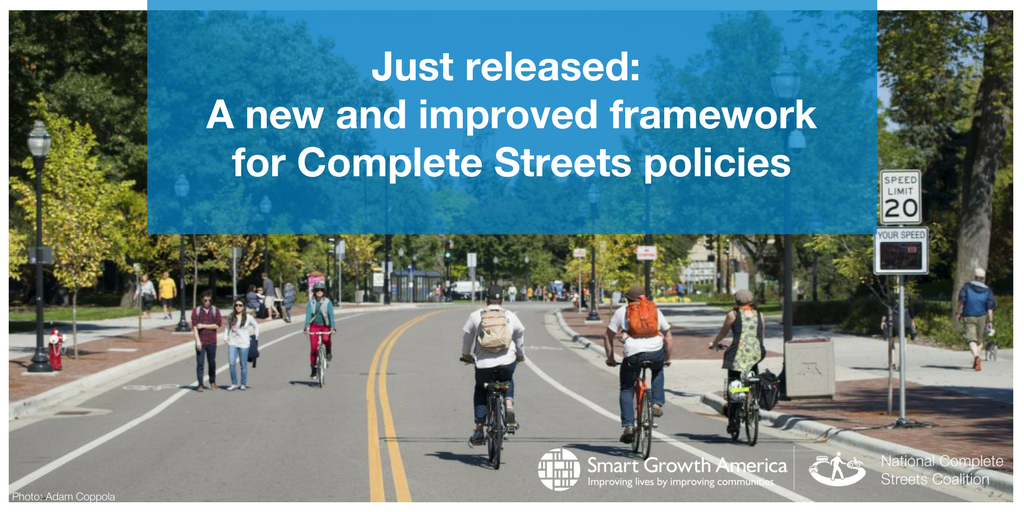
To conclude Complete Streets month at Smart Growth America, we’re proud to publish the brand new policy grading framework and scoring methodology. These changes come after our Steering committee voted to approve the framework in 2017. For months a group of national stakeholders, consisting of engineers, planners, researchers, and advocates, worked to revise the policy elements and truly raise the bar for what Complete Streets look like in practice. So it is only right that we spent the past month highlighting each of these revised elements and gaining a deeper understanding of the essence of Complete Streets moving forward.

Complete Streets

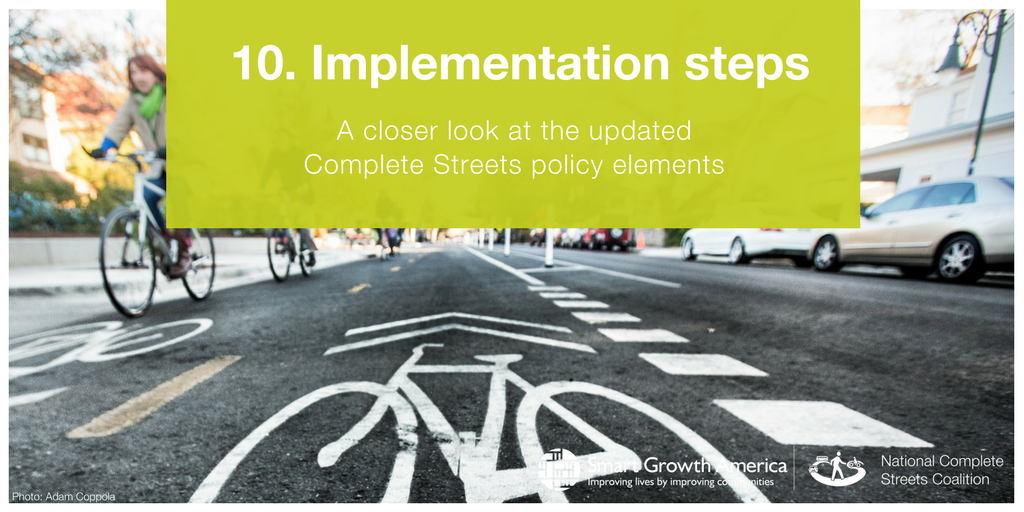
Policy #10: Moving policies forward requires strong implementation steps


Over the last decade, we’ve come to understand that a Complete Streets policy is only the first step to making streets safer and more accessible to everyone. We’ve revised the “Implementation steps” policy element to include increased accountability from jurisdictions and requirements to include equity and community engagement.

Complete Streets

Watch the recording – Fitting the road to the context: Florida’s Context Classification and Complete Streets implementation

Florida’s approach could serve as a model for other states looking to incorporate land-use context in decision-making. The latest webinar from our State Smart Transportation Initiative explained how this approach is being implemented in Florida and how other states can emulate it.

DOT Innovation

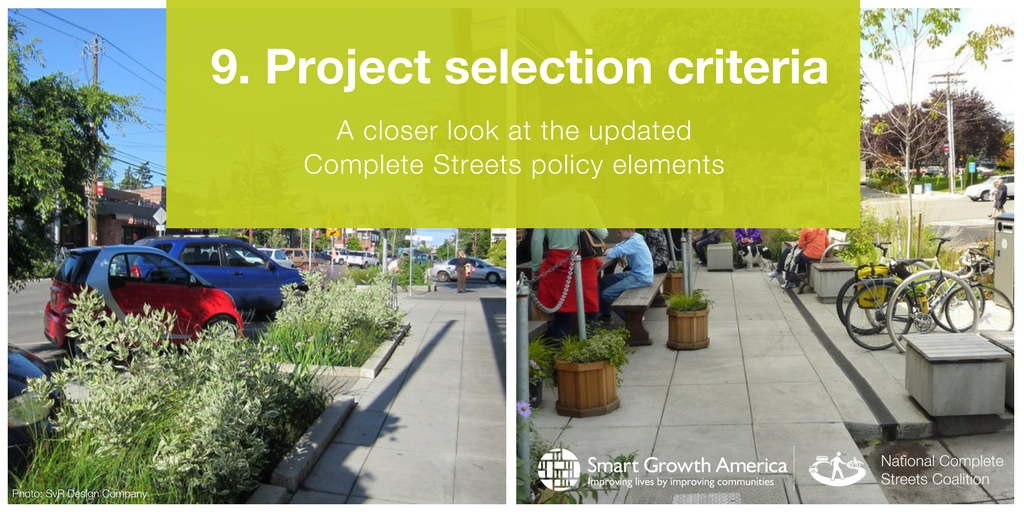
Policy #9: Project selection criteria should prioritize active transportation

To most effectively implement them, a good Complete Streets policy must be fully integrated into the process for selecting transportation projects. And that process should focus on active transportation projects with a priority on underserved communities in order to reduce health, safety, and economic disparities.

Complete Streets

Support small-scale manufacturers on #SmallBizSaturday

In 2017, SGA staff was on the ground in scores of communities like these, helping local elected and civic leaders understand how to support and expand this growing sector of their economy to build strong, vibrant, and walkable neighborhoods.

On this Small Business Saturday, you can help us do even more. Make a donation today so we can reach even more communities in 2018 >>

Advocacy Economic development

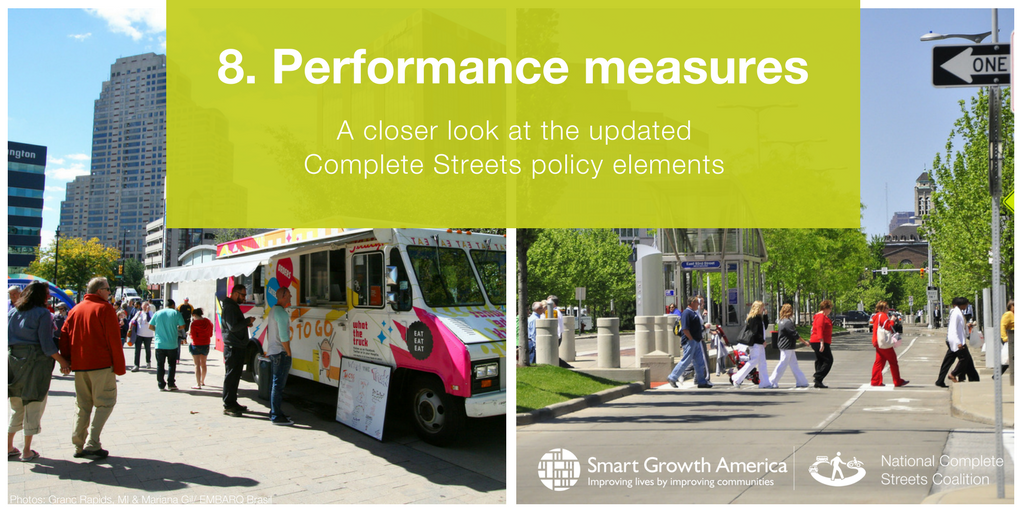
Policy #8: Performance measures: what gets measured, gets done

Performance measures exist to track and measure success in communities that have Complete Streets policies. The revised framework requires measures to expand beyond the usual metrics used such as the number of bike lanes. In Complete Streets policies performance measures should address categories like access, economy, environment, safety, and health. As well as, how implementation will impact communities of concern identified in the policy.

Complete Streets

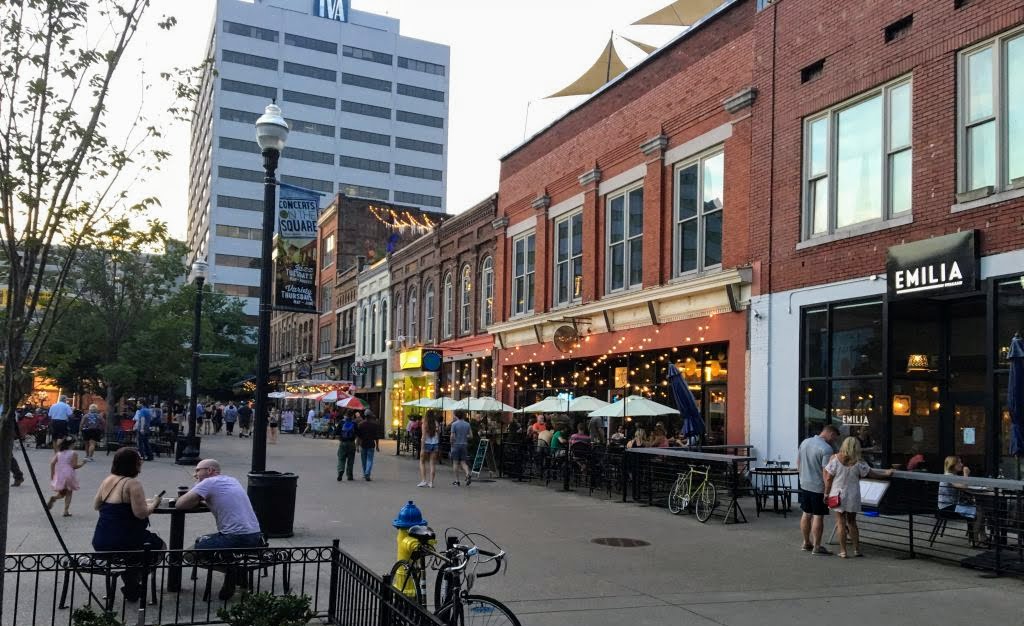
Creatives and makerspaces collaborate in Knoxville, TN

With the recent release of Made in Place: Small-Scale Manufacturing & Neighborhood Revitalization, we’re spotlighting a few standout examples of cities that have fostered a small-scale manufacturing sector to revitalize their local economy. Knoxville, Tennessee benefits from a strong community of makers, real estate developers, and residents with longstanding roots and connections to the city. In 2016, Etsy officially named Knoxville as the first “Etsy Maker City” and the Mayor’s Maker Council voted to adopt the motto “The Maker City” in 2017.

Economic development

20 leaders from five cities tour Greenville, SC for examples of smart growth

This article was originally published on November 20, 2017 by the Upstate Business Journal. Photo by Will Crooks. Smart Growth America and the Knight Foundation recently held the second phase of its inaugural Amazing Place Ideas Forum in Greenville. Held Nov. 14-16, the forum brought more than 20 economic development leaders and elected officials from … Continued

Economic development

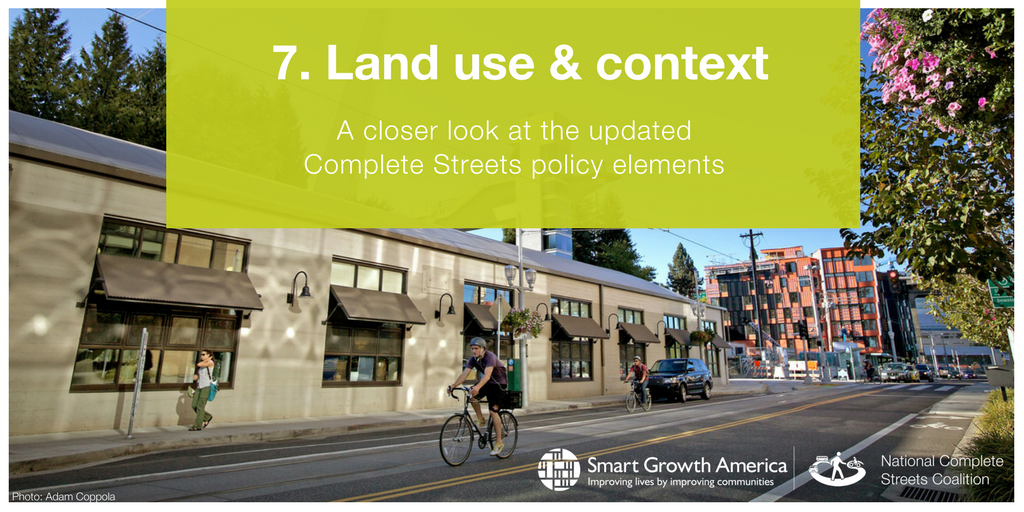
Policy #7: Complete Streets must be designed to serve the current and future land use

We’ve raised the bar for this element of our Complete Streets policy framework to better account for land use and context. In our previous framework, we gave points to policies that simply mention community context in decision making. Now, the updated framework requires Complete Streets policies to integrate land use policies, plans, zoning ordinances, or equivalent documents from jurisdictions at all levels of government.

Complete Streets