Complete Streets News – November 2017
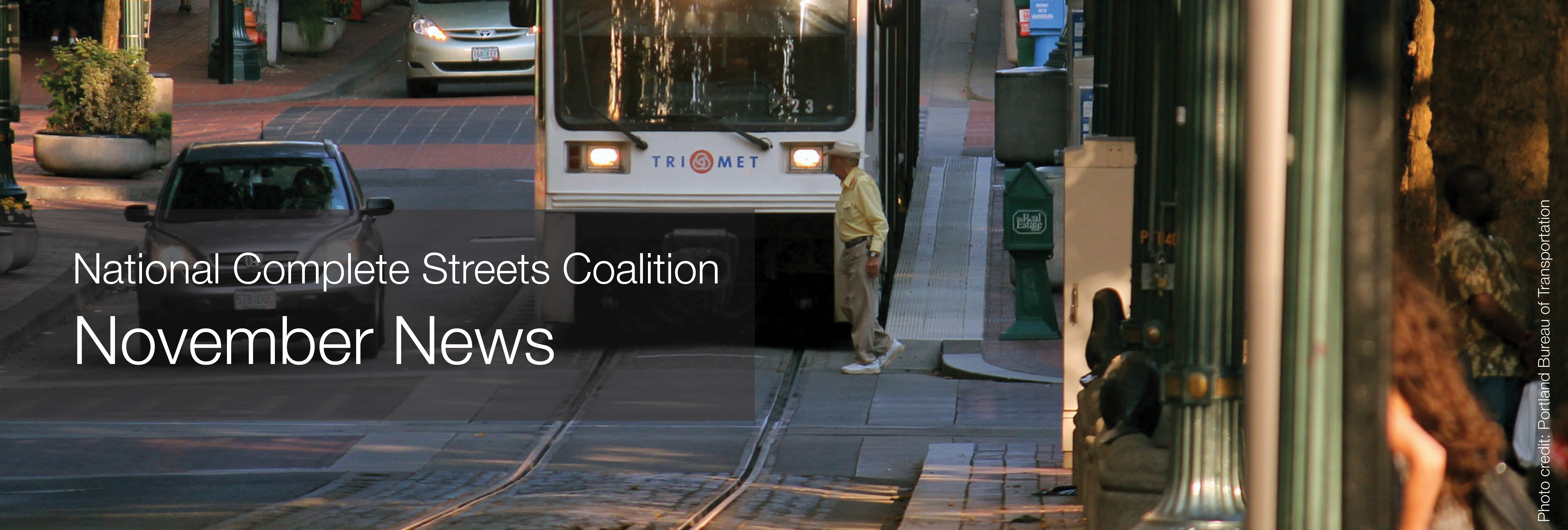
We’ve officially revised our policy grading rubric, known as the 10 Elements of a Complete Streets Policy. The Complete Streets movement has evolved since it began in 2004 to focus far more on implementation and equity, but the framework for grading the quality of policies hasn’t kept pace.
November is Complete Streets month at Smart Growth America; we are sharing a series of blog posts that cover and explain each of the 10 revised policy elements in some detail. The entire revised framework will be available on our website on November 30, 2017.
Save the date! Eighth Annual Complete Streets Dinner — Conveniently scheduled during the 2018 Transportation Research Board meeting. This intimate and fun gathering brings together Complete Streets professionals, policymakers, supporters, and friends to celebrate the successes of the Complete Streets movement in the last year. This year’s dinner will be held Tuesday, January 9, 2018 from 6:00 PM – 9:00pm EST at Carmine’s in Washington, DC. Tickets will go on sale soon. For more information, contact Mae Hanzlik.
Policy #5: Jurisdictions should coordinate with other agencies to create a Complete Streets network
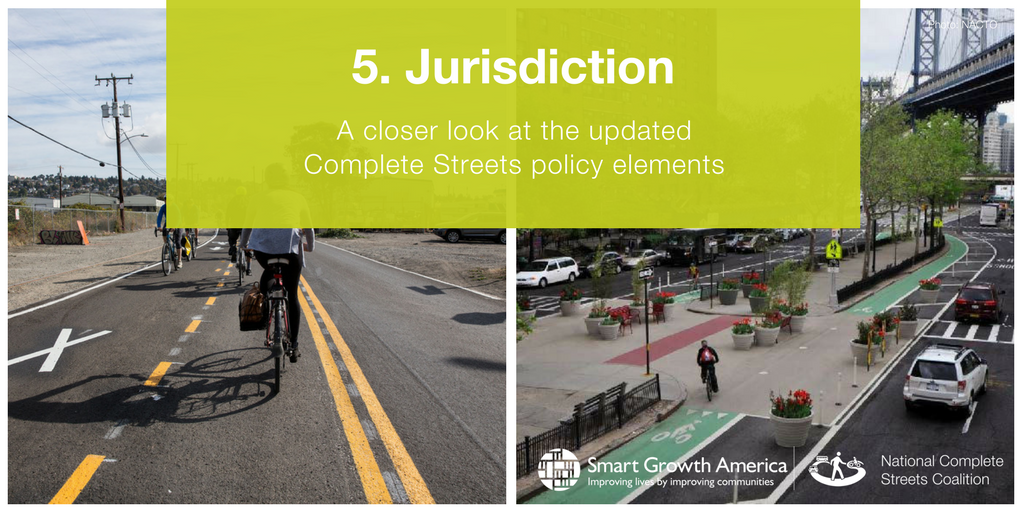
The jurisdiction element addresses how agencies who may be responsible for building or maintaining roads can require outside parties to comply with the Complete Streets policy. Creating a Complete Streets network requires interagency coordination between government departments and partner agencies. We spoke to Byron Rushing, one of our Steering Committee members from the Association of Pedestrian and Bicycle Professionals who shared his insight on why this element is crucial in Complete Streets policies.
Policy #4: Complete Streets policies can have exceptions, as long as they’re clear and accountable
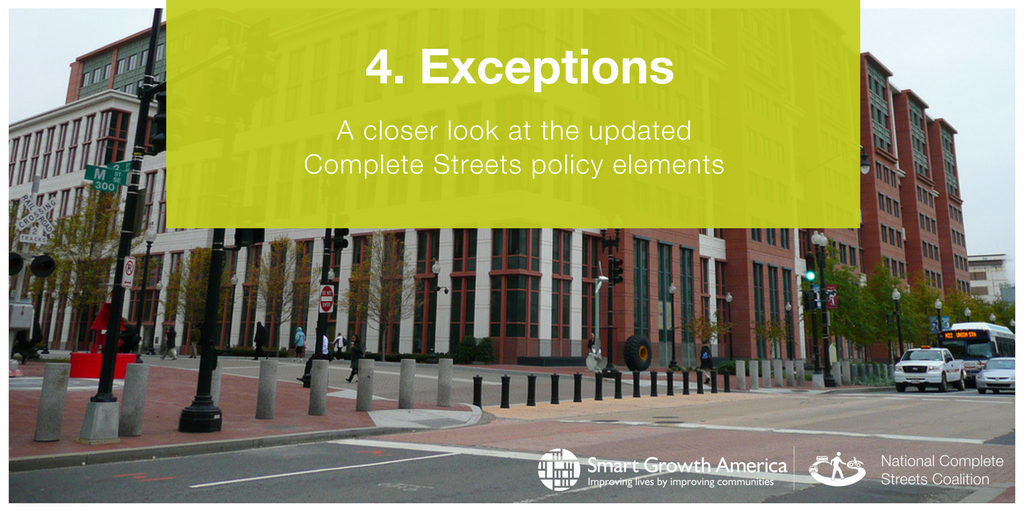
Effective Complete Streets policy implementation requires a process for exceptions to providing for all modes in each project. Exceptions should follow the Federal Highway Administration’s guidance on accommodating bicycle and pedestrian travel and identified best practices frequently used in existing Complete Streets policies. The Coalition believes these exceptions are appropriate with limited potential to weaken the policy.
Policy #3: Complete Streets projects and phases should commit to all users and modes
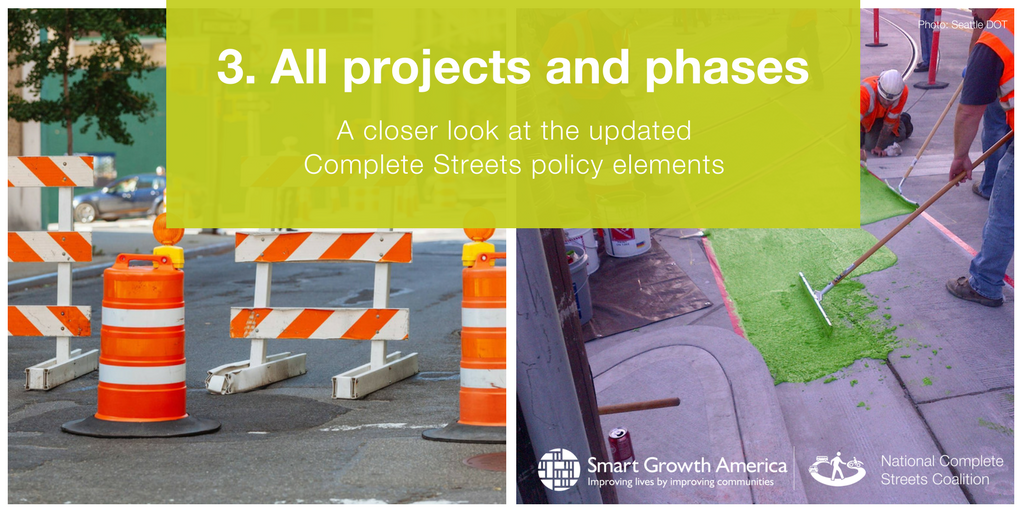
The ideal Complete Streets policy has a strong commitment that all transportation projects and maintenance operations account for the needs of all modes of transportation and all users of the road network. Existing projects and maintenance should be seen as opportunities to implement Complete Streets. However, this does not mean every street needs to add a bike lane during regular maintenance but it is worth considering the potential benefits. We spoke to one of our Steering Committee members Ignacio Bunster-Ossa from AECOM to hear more about how jurisdictions can implement this revised policy element.
Policy #2: Diverse users – Prioritize Complete Streets where it is needed the most
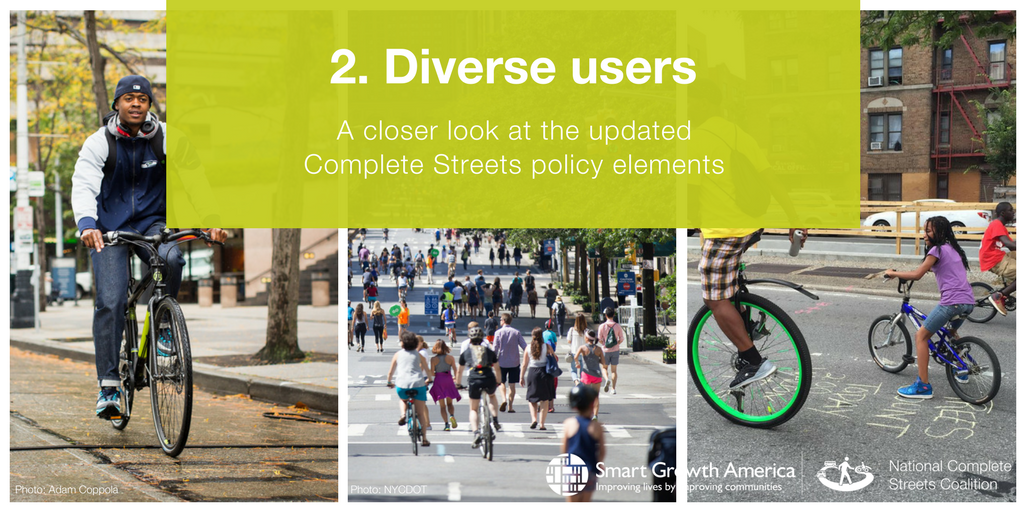
A Complete Streets approach requires “diverse users” to be more than just a buzzword. This brand new addition to our policy framework aims to hold jurisdictions accountable for including equity into their plans based on the composition and objectives of the community, a requirement that was lacking from the previous framework. The U.S. history of systemic discrimination and exclusion based on race and income is part of the transportation context and cannot be ignored. Transportation choices should be safe, convenient, reliable, affordable, accessible, and timely regardless of race, ethnicity, religion, income, gender identity, immigration status, age, ability, languages spoken, or level of access to a personal vehicle.
Register now for “Promoting equitable change through creative placemaking & Complete Streets”
Our next webinar, Promoting Equitable Change through Creative Placemaking & Complete Streets takes place on Tuesday, November 21st from 1:00-2:00 PM EDT.
Policy #1: Vision and intent – Complete Streets are intended to benefit all users equitably
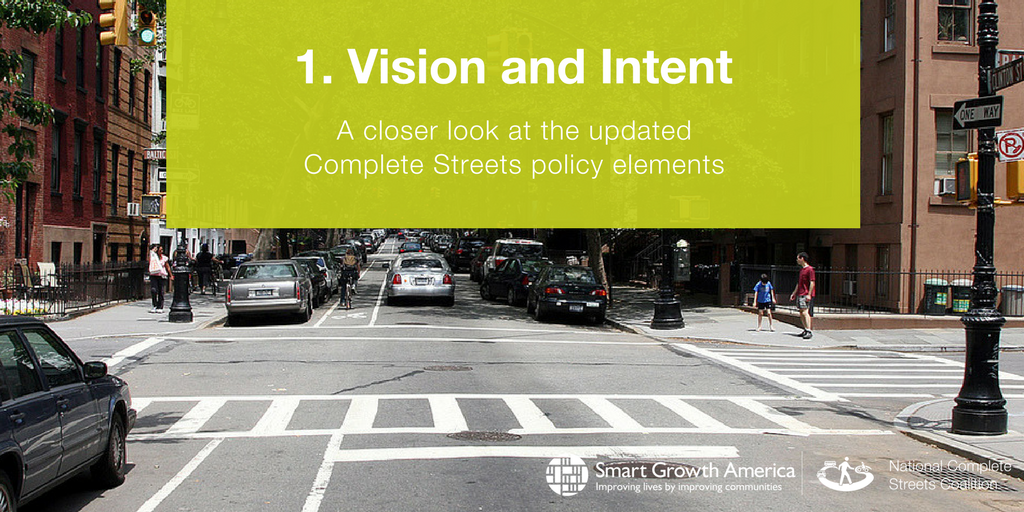
No two communities are identical, and no two Complete Streets policies should be exactly the same either. Vision and intent, a revised element in the updated Complete Streets policy framework, is an opportunity for jurisdictions to customize and prioritize their motivations for adopting a Complete Streets policy. The following post explores the reasoning behind this revisions, and how it can help communities better reach their most vulnerable populations.
This post is part of Complete Streets month at Smart Growth America; we will be sharing a series of blog posts that cover and explain each of the 10 revised policy elements in some detail.
“Public/Private Partnerships: Complete Streets & Large-Scale Development” webinar recap
On October 18th we hosted “Public/Private Partnerships: Complete Streets & Large-Scale Development” the eighth installment in our monthly webinar series, Implementation & Equity 201: The Path Forward to Complete Streets. A recording of the webinar is now available above. You can also download the PDF of the presentation, or read the brief recap below.
Coming soon: A brand new Complete Streets policy framework
Introducing a brand new framework for grading Complete Streets policies
We’ve got big news to share: As you hopefully know already, each year the Coalition releases an analysis and ranking of the best Complete Streets policies in the country based on 10 policy elements that were established more than a decade ago. Beginning in 2018, we will be using a brand new framework to analyze and rank Complete Streets policies.
Northern Indiana gets a kick-start on Complete Streets implementation
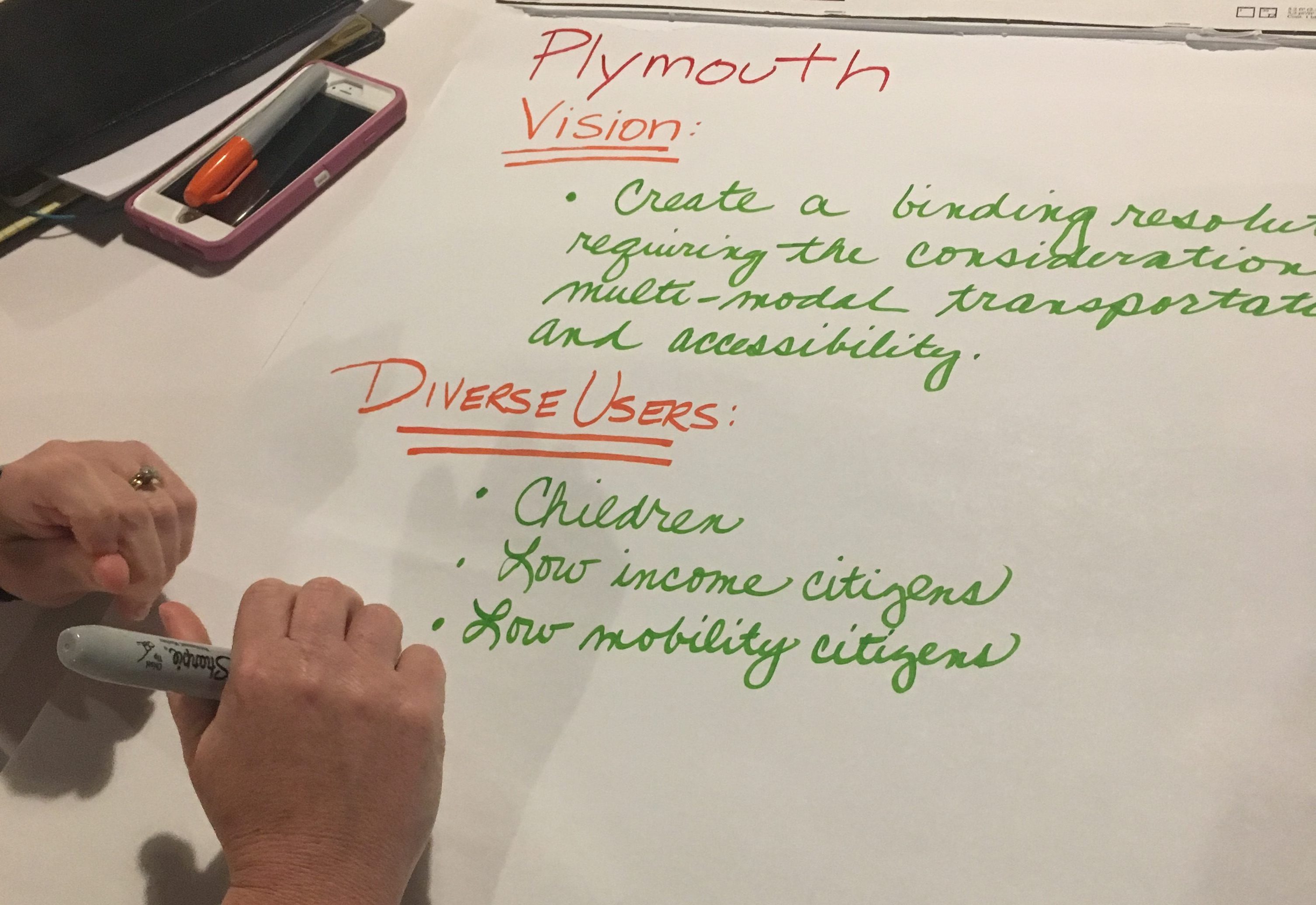
The National Complete Streets Coalition has been working on an exciting new project with Indiana communities along the border of Michigan, in a region known as “Michiana.” Together with the Michiana Area Council of Governments (MACOG), we are helping to bring together communities interested in Complete Streets to make the entire region safer and more convenient for everyone, no matter their age, ability, income, race, or how they choose to travel.